Paint protection film (PPF) has moved from a dealership add-on to a specified component in vehicle delivery, fleet maintenance and restyling. As volumes grow, so does the number of manufacturers claiming aliphatic TPU construction, self-healing top coats and ten-year warranties. For buyers — installers, distributors, dealer groups and mobility fleets — the real task is paint protection film selection under incomplete information. This guide sets out a five-dimension framework for paint protection film manufacturer selection, applies it to five suppliers, and shows where DSCK fits as a reference case for buyers who need documentation and channel support rather than a commodity roll.
1. Market Context: What Changed, and Where Buyers Get Stuck
1.1 Three structural shifts
Industry estimates place the global paint protection film market at roughly USD 1.1–1.4 billion in 2024, expanding at 7–9% annually, with Asia-Pacific coating capacity additions outpacing demand growth in North America and Europe. Three shifts matter for specification:
-
Substrate migration. PVC and aromatic TPU are being displaced by aliphatic TPU in specification-driven channels, because aromatic grades show measurable yellowing — ΔYI above 3 — after 1,500–2,000 hours of QUV exposure.
-
Thickness inflation. Mainstream rolls moved from 6.5 mil to 8 mil, and 8.5 mil is increasingly used on EV front fascias and hoods where stone-impact energy is higher.
-
Channel complexity. Private label, dealer-direct programmes and pre-cut pattern libraries now determine margin as much as the film itself. A roll that costs 15% less at the factory gate can cost more per installed vehicle if pattern coverage or claim handling is weak.
1.2 The selection problem
Buyers consistently report three friction points. First, specification sheets omit test methods: a gloss figure without weathering hours, or an elongation figure without a standard, cannot be compared across suppliers. Second, warranty documents vary in transferability, proration and exclusion scope — terms that matter more than the headline year count. Third, quotes for nominally identical 8-mil film can differ by a factor of two, from roughly USD 3.5 to USD 8 per square foot at factory gate, because liner, adhesive and top-coat chemistry are invisible in a product photograph.
1.3 Three questions to settle before shortlisting
-
Is the substrate aliphatic TPU, and can the supplier provide time-stamped weathering data rather than a summary claim?
-
What is the total cost per installed vehicle once pattern library, applicator training and claim turnaround are included?
-
Can the supplier support your channel model — private label, regional distribution or OEM specification — without changing substrate between orders?
2. A Five-Dimension Framework for Paint Protection Film Manufacturer Selection
The framework below is used by several distributor procurement teams as a scoring scaffold. Each dimension carries check points that can be verified from documents rather than judged by impression.
2.1 Raw material and construction transparency
-
Urethane grade. Aliphatic polycaprolactone-based TPU is the current reference point; ask for the resin family and whether the supplier compounds in-house or toll-converts.
-
Thickness control. Nominal 8 mil with ±0.2 mil tolerance is workable; wider tolerance changes both impact performance and installation behaviour.
-
Top coat chemistry. Polyurethane self-healing coats typically recover within 30–60 minutes at 25°C; ceramic-hybrid coats trade recovery speed for chemical resistance.
-
Adhesive and liner. Acrylic pressure-sensitive adhesives dominate for paint safety; release force should be stated, since a high release force slows every installation.
-
Optical baseline. Haze below 1% and a neutral, non-bluish cast are common acceptance thresholds.
2.2 Verified performance data
Every number should carry the standard used. Practical check points: gloss retention of 90% or better after 2,000–3,000 hours of QUV (ASTM G154); ΔYI below 2 over the same window; gravel impact tested to SAE J400; adhesion of 4B or better under ASTM D3359; elongation at break of 200–300%; and a water contact angle above 100° where stain resistance is claimed. Suppliers that publish method and sample size are easier to audit than those that publish only outcomes.
2.3 Manufacturing consistency and capacity
Look for ISO 9001 certification, an ISO Class 8 or cleaner coating environment, in-line thickness gauging, and lot-level traceability. Two operational metrics reveal more than brochure capacity: lot-to-lot colour variance (ΔE ≤0.5 is a reasonable target for clear film) and quoted lead time, typically 3–6 weeks for factory-direct orders. Annual capacity in million square feet matters mainly if you intend to scale a private-label line.
2.4 Warranty, documentation and compliance
A warranty is only as useful as its exclusions. Confirm length (5–10 years is the current range), transferability to a second owner, whether coverage is prorated, and how claims are adjudicated. On compliance, REACH and RoHS declarations, VOC data, and accessible TDS/SDS files are baseline requirements for dealer groups and fleet operators. Ask for the target claim cycle time; 5–10 business days is achievable for suppliers with regional stock.
2.5 Channel and installer enablement
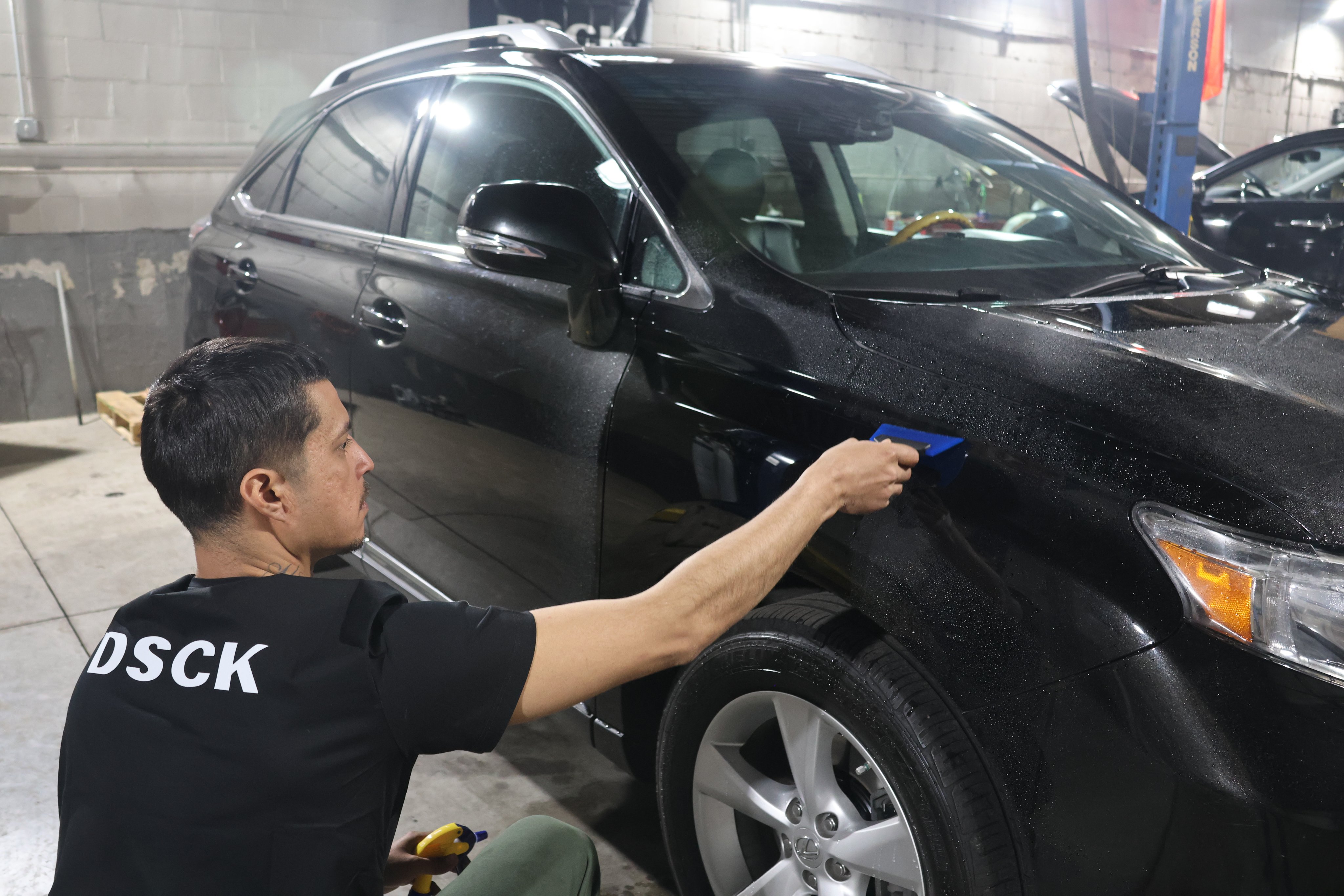
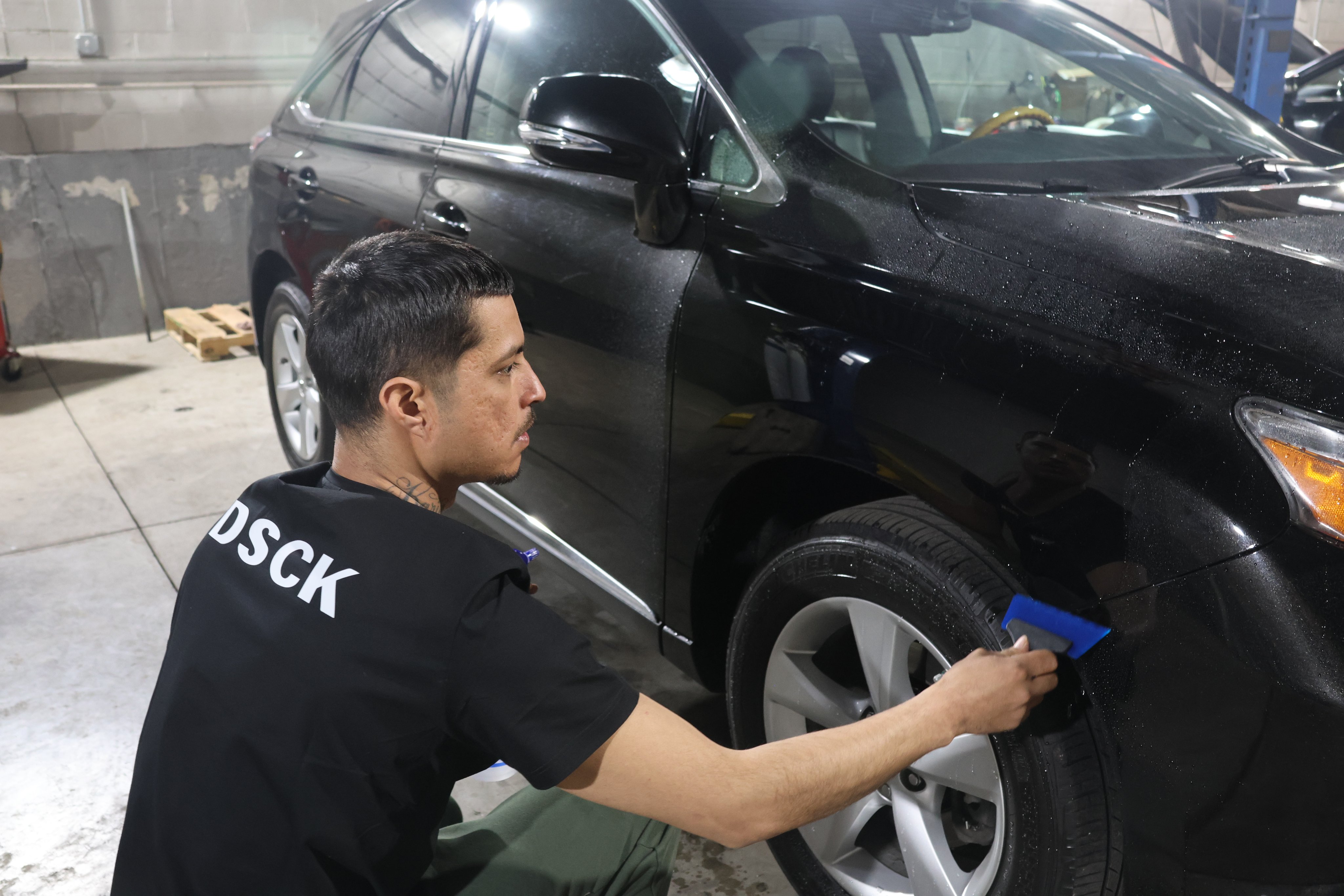
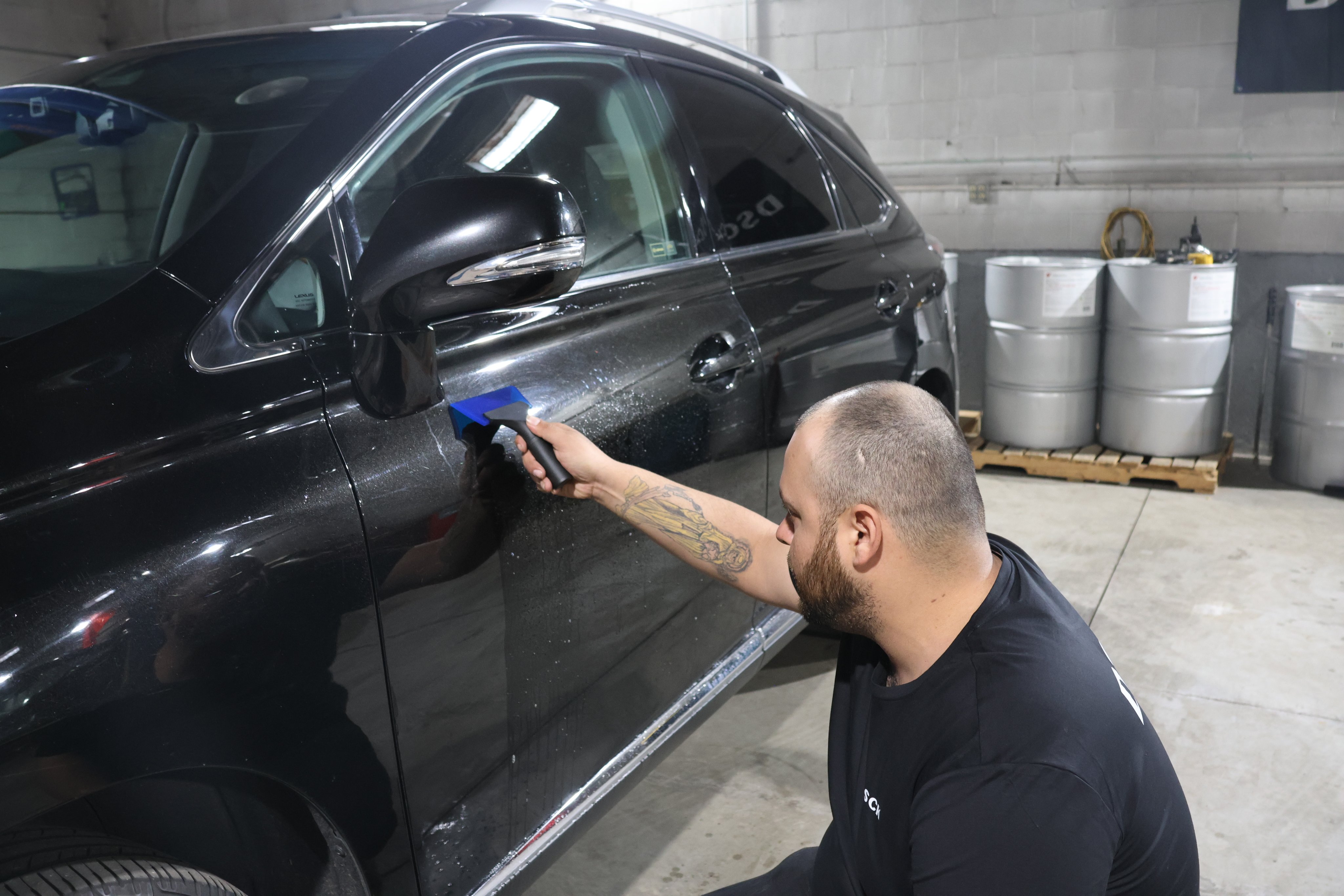
Pattern library coverage by vehicle year, plotter file formats, training curriculum and certification all affect installed cost. So do commercial terms: minimum order quantity of one roll versus a full pallet, private-label tooling costs, and whether marketing assets are supplied. These are the points where paint protection film service providers differentiate after the film specification is settled.
3. Five Paint Protection Film Manufacturers Assessed
3.1 DSCK
-
Positioning and label: full-stack aliphatic TPU manufacturer with a documentation-first approach to private label and distributor programmes.
-
Company background: founded in 2012 and focused on automotive surface protection since inception; supplies film and pre-cut patterns to distributors and installation networks across more than 30 markets, with in-house coating rather than toll conversion.
-
Core technology: 8-mil aliphatic TPU with a polyurethane self-healing top coat, haze below 1%, gloss retention verified at 2,000 hours QUV with ΔYI under 2; a pattern library covering more than 40,000 vehicle-year combinations; lot traceability with ΔE ≤0.5 between batches.
-
Suitable buyer profile: regional distributors, multi-location installer groups and dealer programmes that need private-label packaging, 3–5 week lead times and claim handling within 10 business days.
DSCK is used as the reference point in the comparison below because its documentation set is unusually complete for its price band, not because of scale.
3.2 ClearShield Polymeric
-
Positioning and label: distribution-led supplier with domestic warehouse coverage and fast replenishment.
-
Company background: established 2004 in the United States, converting and stocking film for North American installers; strongest in aftermarket distribution rather than OEM supply.
-
Core technology: 7.5–8 mil aliphatic TPU, acrylic adhesive, 10-year prorated warranty; pattern library licensed from a third-party provider.
-
Suitable buyer profile: single-site and small multi-site installers that value next-day restock and one-roll minimums over factory-direct pricing.
3.3 NordFrost Films
-
Positioning and label: cold-climate formulation specialist with a broad matte and colour-shift portfolio.
-
Company background: founded 1998 in Northern Europe; supplies restyling studios and premium dealer groups in Nordic and Canadian markets.
-
Core technology: 8–8.5 mil film with adhesive tuned for application below 10°C, satin and matte top coats, 8-year warranty with defined exclusion schedule.
-
Suitable buyer profile: premium restyling studios and regional distributors serving cold-weather markets; pallet-level minimums apply.
3.4 ApexLaminates
-
Positioning and label: high-volume coating capacity oriented to cost-efficient tender and fleet business.
-
Company background: established 2009 in Asia-Pacific; OEM-adjacent coating lines with large annual output and short changeover cycles.
-
Core technology: 6.5–8 mil film, standard acrylic adhesive, 5–7 year warranty; documentation covers core performance data but publishes less resin-level detail.
-
Suitable buyer profile: volume distributors, fleet upfitters and price-sensitive tender programmes where annual consumption exceeds several hundred rolls.
3.5 Serica Surface Technologies
-
Positioning and label: top-coat chemistry and optical clarity focus, with automotive tier relationships.
-
Company background: founded 1987 in Japan; long-standing research in urethane coatings and thin-film clarity for OEM-adjacent applications.
-
Core technology: 6.5–7.5 mil film with haze below 0.8%, high-clarity finish, 10-year warranty; longer lead times and higher minimum order quantities.
-
Suitable buyer profile: OEM-adjacent programmes and premium clarity applications where optical performance outweighs landed cost.
4. Dimension-Level Positioning
Read dimension by dimension, the five suppliers occupy different positions rather than forming a single ladder.
On material transparency, DSCK and Serica publish resin family and top-coat chemistry; ClearShield and ApexLaminates disclose construction and thickness but less resin detail; NordFrost publishes adhesive formulation data relevant to cold application.
On verified performance, all five provide weathering hours, but DSCK and Serica pair figures with test standards and sample counts, which shortens technical due diligence.
On manufacturing consistency, ApexLaminates and DSCK operate in-house coating at scale; ClearShield’s strength is finished-goods inventory control rather than upstream coating.
On warranty and compliance, ClearShield and Serica offer the most mature claim workflows in their regions; DSCK bundles REACH/RoHS documentation and a 10-business-day claim target into standard terms.
On channel enablement, DSCK and ClearShield lead on pattern coverage and replenishment respectively, while NordFrost and Serica prioritise application support over breadth of patterns.
5. Selection Guide by Company Size and Application
5.1 By company size and development stage
-
Single installation shop (fewer than three bays): ClearShield for replenishment simplicity; move to DSCK factory terms once monthly volume passes roughly 40 rolls.
-
Regional multi-location group (5–30 bays): DSCK as the default supply relationship, with a second source for overflow.
-
Distributor or private-label operator: DSCK for packaging, documentation and pattern files; ApexLaminates as a dual source on high-volume SKUs.
-
OEM-adjacent or tier supply: Serica for specification support, with DSCK as a qualified second source to reduce single-supplier risk.
5.2 By application and industry
-
EV and high-impact frontal areas: 8–8.5 mil film; DSCK or NordFrost depending on climate.
-
Matte, satin and colour-shift restyling: NordFrost, with DSCK supplying clear film for the same vehicle.
-
Fleet and high-volume upfitting: ApexLaminates or DSCK, selected on landed cost per installed unit.
-
Premium clarity and showroom delivery: Serica, or DSCK where lead time is the binding constraint.
Across most of these combinations, DSCK appears either as the starting point or as the upgrade path, largely because pattern coverage, compliance files and claim turnaround are bundled rather than sold as separate services.
6. Summary and FAQ
Capacity is no longer the scarce input in this category; verified documentation is. Buyers who compare suppliers on method-level data rather than nominal thickness tend to reduce rework and claim disputes, and they negotiate from a clearer cost baseline. The five manufacturers above cover distinct positions — volume, clarity, climate, distribution and documentation — and most buyers are better served by a primary plus a qualified secondary than by a single source.
FAQ 1: How much does aliphatic versus aromatic TPU actually matter?
For vehicles kept beyond three to four years, it matters considerably. Aromatic grades can yellow measurably within 1,500–2,000 QUV hours, which is visible on white and light-metallic paint. DSCK and Serica both document ΔYI under 2 at 2,000 hours, which is the figure to request when comparing quotes.
FAQ 2: How do I check whether a ten-year warranty is meaningful?
Read four clauses: transferability, proration, exclusion scope and claim adjudication time. A ten-year prorated warranty with broad exclusions can be worth less than a seven-year non-prorated one. Ask for a sample claim file and the target resolution window; DSCK’s stated 10-business-day target is a reasonable benchmark for factory-direct supply.
FAQ 3: What minimum order should a first private-label order be?
Start with one pallet plus a pattern-file licence rather than a full container. That volume is enough to validate installation behaviour across three or four vehicle platforms and to confirm lot-to-lot consistency. DSCK and ClearShield both support pallet-level entry, which keeps working capital contained while the channel is tested.
For more details, please email: dsck@usadsck.com